%20%20--%3E%0A%3Csvg%20version%3D%221.1%22%20xmlns%3D%22http%3A%2F%2Fwww.w3.org%2F2000%2Fsvg%22%20xmlns%3Axlink%3D%22http%3A%2F%2Fwww.w3.org%2F1999%2Fxlink%22%20x%3D%220px%22%20y%3D%220px%22%0A%09%20viewBox%3D%220%200%202329.5%20200%22%20style%3D%22enable-background%3Anew%200%200%202329.5%20200%3B%22%20xml%3Aspace%3D%22preserve%22%3E%0A%3Cstyle%20type%3D%22text%2Fcss%22%3E%0A%09.st0%7Bfill%3A%23231F20%3B%7D%0A%09.st1%7Bfill%3A%23001641%3B%7D%0A%09.st2%7Bfill%3A%23FFFFFF%3B%7D%0A%09.st3%7Bfill%3A%23999999%3B%7D%0A%3C%2Fstyle%3E%0A%3Cg%20id%3D%22Template%22%3E%0A%3C%2Fg%3E%0A%3Cg%20id%3D%22Layer_2%22%3E%0A%09%3Cg%3E%0A%09%09%3Cpath%20class%3D%22st2%22%20d%3D%22M190.3%2C6.4h-77.2l-2.8%2C34.5h8.3c5%2C0%2C7.4%2C1.4%2C7.4%2C4.1c0%2C0.8-0.2%2C1.8-0.6%2C2.8L96.6%2C96l-29-48.3%0A%09%09%09c-0.4-1-0.6-1.9-0.6-2.8c0-2.8%2C2.5-4.1%2C7.4-4.1h8.3L80%2C6.4H2.8L0%2C40.9h11c4.6%2C0%2C8.7%2C2.3%2C12.4%2C6.9l52.3%2C82.6v27.7%0A%09%09%09c0%2C4.6-2.3%2C6.9-6.9%2C6.9H48.1l2.8%2C34.5h91l2.8-34.5H124c-4.6%2C0-6.9-2.3-6.9-6.9v-27.6h0.1l52.4-82.8c3.7-4.6%2C7.8-6.9%2C12.4-6.9h11%0A%09%09%09L190.3%2C6.4z%22%2F%3E%0A%09%09%3Cpath%20class%3D%22st2%22%20d%3D%22M379.3%2C158.1L351.7%2C47.8c0-4.6%2C2.3-6.9%2C6.9-6.9h9.7l-2.8-34.5h-131l-2.8%2C34.5h9.7c4.6%2C0%2C6.9%2C2.3%2C6.9%2C6.9%0A%09%09%09l-27.6%2C110.3c-2.8%2C4.6-6.4%2C6.9-11%2C6.9h-16.6l2.8%2C34.5h80l2.8-34.5H269c-4.6%2C0-6.9-2.3-6.9-6.9l4.8-20.7h66.2l4.8%2C20.7%0A%09%09%09c0%2C4.6-2.3%2C6.9-6.9%2C6.9h-9.7l2.8%2C34.5h80l2.8-34.5h-16.6C385.7%2C165%2C382.1%2C162.7%2C379.3%2C158.1z%20M274.5%2C105.6l15.2-64.7h20.7%0A%09%09%09l15.2%2C64.7H274.5z%22%2F%3E%0A%09%09%3Cpath%20class%3D%22st2%22%20d%3D%22M537.7%2C6.4l-2.8%2C34.5h20.7c4.6%2C0%2C6.9%2C2.3%2C6.9%2C6.9v80l-69-121.4h-66.2l-2.8%2C34.5h20.7c4.6%2C0%2C6.9%2C2.3%2C6.9%2C6.9%0A%09%09%09v110.3c0%2C4.6-2.3%2C6.9-6.9%2C6.9h-20.7l2.8%2C34.5h91l2.8-34.5h-20.7c-4.6%2C0-6.9-2.3-6.9-6.9v-80l69%2C121.4h41.4V47.8%0A%09%09%09c0-4.6%2C2.3-6.9%2C6.9-6.9h20.7l-2.8-34.5H537.7z%22%2F%3E%0A%09%09%3Cpath%20class%3D%22st2%22%20d%3D%22M814.6%2C158.1l-22.8-55.3h-6.8l22.6-55c1.8-4.6%2C5-6.9%2C9.7-6.9h17.9l-2.8-34.5h-52.4l-32.6%2C80h-29.5V47.8%0A%09%09%09c0-4.6%2C2.3-6.9%2C6.9-6.9h20.7l-2.8-34.5h-91l-2.8%2C34.5h20.7c4.6%2C0%2C6.9%2C2.3%2C6.9%2C6.9v110.3c0%2C4.6-2.3%2C6.9-6.9%2C6.9h-20.7l2.8%2C34.5h91%0A%09%09%09l2.8-34.5H725c-4.6%2C0-6.9-2.3-6.9-6.9v-37.2h37l32%2C78.6h52.4l2.8-34.5h-17.9C819.7%2C165%2C816.4%2C162.7%2C814.6%2C158.1z%22%2F%3E%0A%09%09%3Cpath%20class%3D%22st2%22%20d%3D%22M997.8%2C13.8c-6.8-5-16-7.4-27.6-7.4h-69c-27.6%2C0-41.4%2C13.8-41.4%2C41.4v27.6c0%2C27.6%2C13.8%2C41.4%2C41.4%2C41.4h75.9%0A%09%09%09c4.6%2C0%2C6.9%2C2.3%2C6.9%2C6.9v34.5c0%2C4.6-2.3%2C6.9-6.9%2C6.9h-75.9v-27.6h-41.4v62.1H984c27.6%2C0%2C41.4-13.8%2C41.4-41.4v-34.5%0A%09%09%09c0-27.6-13.8-41.4-41.4-41.4h-75.9c-4.6%2C0-6.9-2.3-6.9-6.9V47.8c0-4.6%2C2.3-6.9%2C6.9-6.9h69c4.6%2C0%2C6.9%2C2.3%2C6.9%2C6.9v20.7h41.4v-69%0A%09%09%09h-27.6V13.8z%22%2F%3E%0A%09%09%3Cpath%20class%3D%22st2%22%20d%3D%22M1233.9%2C13.8c-6.8-5-16-7.4-27.6-7.4h-69c-27.6%2C0-41.4%2C13.8-41.4%2C41.4v110.3c0%2C27.6%2C13.8%2C41.4%2C41.4%2C41.4h82.8%0A%09%09%09c27.6%2C0%2C41.4-13.8%2C41.4-41.4v-69h-75.9v34.5h34.5v34.5c0%2C4.6-2.3%2C6.9-6.9%2C6.9h-69c-4.6%2C0-6.9-2.3-6.9-6.9V47.8%0A%09%09%09c0-4.6%2C2.3-6.9%2C6.9-6.9h69c4.6%2C0%2C6.9%2C2.3%2C6.9%2C6.9v20.7h41.4v-69h-27.6V13.8z%22%2F%3E%0A%09%09%3Cpath%20class%3D%22st2%22%20d%3D%22M1403.3%2C6.4h-82.8c-27.6%2C0-41.4%2C13.8-41.4%2C41.4v110.3c0%2C27.6%2C13.8%2C41.4%2C41.4%2C41.4h82.8%0A%09%09%09c27.6%2C0%2C41.4-13.8%2C41.4-41.4V47.8C1444.7%2C20.2%2C1430.9%2C6.4%2C1403.3%2C6.4z%20M1403.3%2C158.1c0%2C4.6-2.3%2C6.9-6.9%2C6.9h-69%0A%09%09%09c-4.6%2C0-6.9-2.3-6.9-6.9V47.8c0-4.6%2C2.3-6.9%2C6.9-6.9h69c4.6%2C0%2C6.9%2C2.3%2C6.9%2C6.9V158.1z%22%2F%3E%0A%09%09%3Cpath%20class%3D%22st2%22%20d%3D%22M1705.7%2C6.4h-77.2l-2.8%2C34.5h8.3c5%2C0%2C7.4%2C1.4%2C7.4%2C4.1c0%2C0.8-0.2%2C1.8-0.6%2C2.8l-29%2C48.3l-29-48.3%0A%09%09%09c-0.4-1-0.6-1.9-0.6-2.8c0-2.8%2C2.5-4.1%2C7.4-4.1h8.3l-2.8-34.5h-77.2l-2.8%2C34.5h11c4.6%2C0%2C8.7%2C2.3%2C12.4%2C6.9l52.3%2C82.6v27.7%0A%09%09%09c0%2C4.6-2.3%2C6.9-6.9%2C6.9h-20.7l2.8%2C34.5h91l2.8-34.5h-20.7c-4.6%2C0-6.9-2.3-6.9-6.9v-27.6h0.1l52.4-82.8c3.7-4.6%2C7.8-6.9%2C12.4-6.9%0A%09%09%09h11L1705.7%2C6.4z%22%2F%3E%0A%09%09%3Cpath%20class%3D%22st2%22%20d%3D%22M1894.1%2C158.1l-27.6-110.3c0-4.6%2C2.3-6.9%2C6.9-6.9h9.7l-2.8-34.5h-131l-2.8%2C34.5h9.7c4.6%2C0%2C6.9%2C2.3%2C6.9%2C6.9%0A%09%09%09l-27.6%2C110.3c-2.8%2C4.6-6.4%2C6.9-11%2C6.9h-16.6l2.8%2C34.5h80l2.8-34.5h-9.7c-4.6%2C0-6.9-2.3-6.9-6.9l4.8-20.7h66.2l4.8%2C20.7%0A%09%09%09c0%2C4.6-2.3%2C6.9-6.9%2C6.9h-9.7l2.8%2C34.5h80l2.8-34.5h-16.6C1900.6%2C165%2C1896.9%2C162.7%2C1894.1%2C158.1z%20M1789.3%2C105.6l15.2-64.7h20.7%0A%09%09%09l15.2%2C64.7H1789.3z%22%2F%3E%0A%09%09%3Cpath%20class%3D%22st2%22%20d%3D%22M2104.9%2C158.1l-14.9-35.6c19.1-3.9%2C28.7-17.3%2C28.7-40.3V47.8c0-27.6-13.8-41.4-41.4-41.4h-135.2l-2.8%2C34.5%0A%09%09%09h20.7c4.6%2C0%2C6.9%2C2.3%2C6.9%2C6.9v110.3c0%2C4.6-2.3%2C6.9-6.9%2C6.9h-20.7l2.8%2C34.5h91l2.8-34.5h-20.7c-4.6%2C0-6.9-2.3-6.9-6.9v-34.5h38.1%0A%09%09%09l30.9%2C75.9h52.4l2.8-34.5h-17.9C2109.9%2C165%2C2106.7%2C162.7%2C2104.9%2C158.1z%20M2077.3%2C82.2c0%2C4.6-2.3%2C6.9-6.9%2C6.9h-62.1V47.8%0A%09%09%09c0-4.6%2C2.3-6.9%2C6.9-6.9h55.2c4.6%2C0%2C6.9%2C2.3%2C6.9%2C6.9V82.2z%22%2F%3E%0A%09%09%3Cpath%20class%3D%22st2%22%20d%3D%22M2288.1%2C6.4h-135.2l-2.8%2C34.5h20.7c4.6%2C0%2C6.9%2C2.3%2C6.9%2C6.9v110.3c0%2C4.6-2.3%2C6.9-6.9%2C6.9h-20.7l2.8%2C34.5h135.2%0A%09%09%09c27.6%2C0%2C41.4-13.8%2C41.4-41.4V47.8C2329.5%2C20.2%2C2315.7%2C6.4%2C2288.1%2C6.4z%20M2288.1%2C158.1c0%2C4.6-2.3%2C6.9-6.9%2C6.9H2226%0A%09%09%09c-4.6%2C0-6.9-2.3-6.9-6.9V47.8c0-4.6%2C2.3-6.9%2C6.9-6.9h55.2c4.6%2C0%2C6.9%2C2.3%2C6.9%2C6.9V158.1z%22%2F%3E%0A%09%3C%2Fg%3E%0A%3C%2Fg%3E%0A%3C%2Fsvg%3E%0A)

Loyalty means a lot in the fabric of baseball history. It’s one thing to be an all-time great that gets enshrined in Cooperstown; it’s another to do it with one franchise and one franchise only.
There are quite a few all-time baseball greats who didn’t spend their entire career with one team. Babe Ruth had his infamous stint with the Boston Red Sox, Hank Aaron had a short stint with the Milwaukee Brewers, Willie Mays ended his career with the New York Mets… you get the point. While these are all franchise icons, they don’t have the honor of spending their entire career with one franchise.
But there are plenty of all-time greats who did. Not counting active players, which really only applies to Mike Trout given the scope of this list, here are the 30 greatest players in MLB history who only suited up for one team.
30. Lou Whitaker, Detroit Tigers
The biggest non-steroid snub in Hall of Fame history will not be snubbed from this list of one-franchise greats. Lou Whitaker etched his place in baseball history as one of the greatest second basemen of all time and was a key member of the 1984 Detroit Tigers team that won the World Series.
Whitaker was a five-time All-Star, four-time Silver Slugger, three-time Gold Glove winner, and won the 1978 American League Rookie of the Year. Sweet Lou ranks seventh among second basemen in career WAR, yet only received 2.9% of the votes when he was on the Hall of Fame ballot in 2001. All six second basemen ahead of Whitaker in career WAR are in the Hall.
29. Alan Trammell, Detroit Tigers
It’s only fitting that the greatest double-play duo to ever play the game ranks next to each other on this list. Trammell played 19 seasons alongside Whitaker as the Tigers' shortstop and nearly suffered the same Hall of Fame fate. It wasn’t until the Modern Baseball Era Committee inducted him in 2018 that Trammell received the honor he certainly deserved.
The 1994 World Series MVP was a six-time All-Star, four-time Gold Glove winner and three-time Slugger Slugger. Trammell is one of 11 shortstops with 1,200 runs scored and 1,000 RBI, and fittingly ranks 11th all-time among shortstops in career WAR. Together, Trammell and Whitaker turned 1,307 double plays, the most in MLB history.

28. Tony Gwynn, San Diego Padres
Tony Gwynn represents a dying breed of baseball players. The contact-first left-handed hitter excelled at getting the ball in play at any cost, sacrificing power in favor of bat-to-ball prowess. With baseball transitioning to the high-strikeout, low-contact sport it is today, there likely won’t ever be another batter who threatens to hit .400 as Gwynn did in 1994.
In an era where every award has to be named after a former player or a corporate sponsor, the batting title should be renamed after Gwynn. Gwynn won the award a National League record eight times throughout his career. No player after 1980 has more than five.
The most interesting thing about Gwynn’s career in retrospect is how little he struck out. Gwynn never struck out more than 40 times in a season and had only one game in his entire career with three or more strikeouts. He played 2,440 games for the San Diego Padres.
27. Barry Larkin, Cincinnati Reds
Barry Larkin would have thrived in the modern game where batting average has been exchanged for on-base percentage. While never a slouch at the plate in producing hits, Larkin’s real superpower at the plate was his feel for the strike zone. Larkin recorded more walks (939) than strikeouts (817) in his 19-year career with the Reds. He is one of 11 players over the last 50 years to play at least 2,000 games and walk more than he struck out.
It wasn’t just that Larkin had great plate discipline; he was a true five-tool player who added power, speed, and great defense on the other end. Larkin won the 1995 NL MVP behind the first 30/30 season for a shortstop in MLB history. Had he missed less time due to injuries in his career, Larkin almost certainly would have finished with 200+ career home runs and 450+ career stolen bases. Only six players in MLB history have hit those marks.
26. Jeff Bagwell, Houston Astros
Jeff Bagwell is a tough player to rank on this list. Bagwell has a higher WAR than those at the bottom of the list and ranks 66th all time, one spot ahead of Pete Rose, in the metric. While Bagwell is undoubtedly an all-time great and one of the best hitters of his generation, his overall contributions to the game do hold him back on this list.
Bagwell’s best seasons are truly special, but he made just four All-Star teams with three Silver Sluggers. It doesn’t help that Bagwell was pretty bad in the playoffs, posting a .226 batting average and .685 OPS in 33 games. Regardless, Bagwell is a deserving member of the Hall of Fame and is one of the greatest players in Astros history.
25. Charlie Gehringer, Detroit Tigers
More so than most on this list, Charlie Gehringer was a beacon of consistency for the Detroit Tigers in the 1920s and 1930s. Gehringer doesn’t have the lofty multi-year prime that many of the players on this list have, but he has two decades of consistency that were headlined by one MVP season in 1937 when he hit .371.
Gehringer gets lost a bit in baseball history as he played during the height of the Murderer’s Row Yankees. He is fifth all-time in WAR among second basemen and has the second-best walk-to-strikeout ratio among players with 2,000 games in MLB history. He is one of 19 MLB players ever to lead the league in five separate offensive categories, doing so in 1929 with runs, hits, doubles, triples, and stolen bases.
24. Sandy Koufax, Brooklyn/Los Angeles Dodgers
A longer prime would have catapulted Sandy Koufax higher on this list. Koufax was on an all-time trajectory in his 20s and had a real chance of going down as the greatest southpaw of all time if his elbow didn’t explode when he was 30.
Koufax spent only 11 seasons in MLB and had one of the most dominant five-year stretches to end his career once the Dodgers moved to Los Angeles. Koufax led the league in ERA every year from 1962 through 1966, winning three Cy Young Awards and an MVP in the process. He held a 1.95 ERA across 1,377 innings pitched in that five-year window.
Most notably, Koufax has one of the greatest games ever pitched. Koufax spun a perfect game with 14 strikeouts against the Chicago Cubs in 1965, which was the fourth no-hitter of his illustrious career.
23. Ernie Banks, Chicago Cubs
Ernie Banks has the infamous title of being one of the greatest baseball players of all time to never reach the postseason. Mr. Cub spent 19 seasons in Chicago when the franchise was embroiled in the curse of the Billy Goat. Banks got a bad draw, though, as his entire prime was spent in the Pennant Era where the best team from each league advanced directly to the World Series.
Banks won two MVP awards while a member of the Cubs and has one of the greatest offensive primes in MLB history. In six seasons from 1955 to 1960, Banks slugged 248 home runs with a .294 batting average and .938 OPS, all while playing at pitcher-friendly Wrigley Field.
A better second half to his career, which consisted of nine consecutive sub-.800 OPS seasons, would have propelled Banks higher on this list.
22. Robin Yount, Milwaukee Brewers
Robin Yount's list of accolades is shorter than many on this list. He was only named an All-Star three times in his career and he paired that with just three Silver Sluggers and one Gold Glove. Yount did, however, win two American League MVPs during his 20-year tenure with the Milwaukee Brewers.
High volume does a lot of the heavy lifting for Yount, who only had one season with an OPS above .900 (his MVP season in 1982). He never hit 30 home runs in a season and he only drove in 100 RBI three times. His versatility and adaptability go unmatched, however. Yount won one of his MVPs as a shortstop and the other as a center fielder, making him the only player in MLB history to accomplish such a feat at two premium defensive positions.
21. Jim Palmer, Baltimore Orioles
Jim Palmer achieved a level of workhorse in the 1970s that modern pitchers will likely never replicate. Palmer averaged 287.7 innings pitched per season from 1970 through 1978, leading the league in innings pitched four times. Palmer is one of only five pitchers to surpass 300 innings pitched in a season four or more times since 1960.
Palmer is also one of 11 pitchers to win three Cy Young awards, having won three out of four years from 1973 through 1976. His magnum opus was the 1975 season, where he led the league in wins (23), ERA (2.09) and shutouts (10) while tossing 323 total innings. Palmer is seventh in career shutouts since 1960.

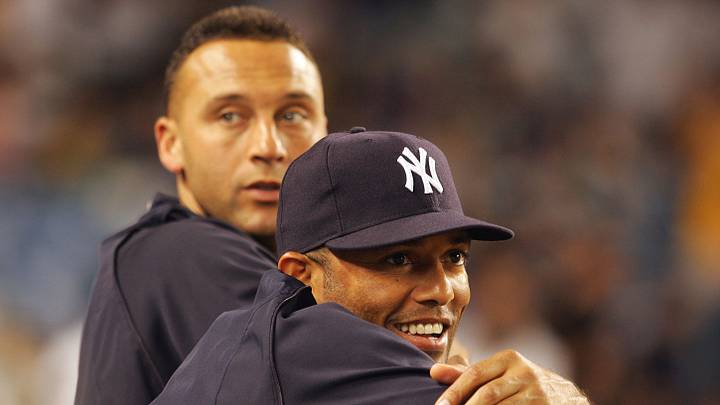
20. Derek Jeter, New York Yankees
Depending on who you are and where your allegiance lies, you’re likely either upset Derek Jeter ranks too low or outraged that he somehow made this list entirely.
Derek Jeter is the textbook definition of someone getting so overrated that they actually become underrated in the fabric of baseball history. Sure, Jeter was a statistically bad fielder and his hitting stats, albeit great, never made him one of the five most dangerous bats in the sport. And yes, he did it all for the New York Yankees during the height of their relevance, which certainly fueled the polarized debates.
But the facts are this: Jeter ranks sixth all-time in hits and is one of five primary shortstops to cross the 3,000 mark. He’s a five-time World Series champion who hit over .300 in the playoffs. Yes, his numbers are helped by raw volume and overall team success, but isn’t that part of the equation? Shouldn’t Jeter’s durability be seen as an endearing part of his legacy, not as some disqualifier for his greatness?
Is Jeter a Mount Rushmore-level baseball great? No. But have the conversations around him skewed too far in the other direction? Certainly.
19. Brooks Robinson, Baltimore Orioles
Defense doesn’t get better at the hot corner than Brooks Robinson. With 16 consecutive Gold Gloves as a member of the Baltimore Orioles, Robinson has the most Gold Gloves of any position player in MLB history. He has three more than second-place Ivan Rodriguez, who did so behind the plate as a catcher.
Robinson was no slouch with the bat in his hand during his prime, either. While he wasn’t as menacing at the plate as others on this list, he was durable and consistent for the Orioles across his 23-year tenure with the team. Robinson’s best year was 1964, when he won the AL MVP award behind 28 home runs, 118 RBI, a .317 average, and, of course, elite defense. The Human Vacuum Cleaner is tied for the 10th-most all-star appearances in MLB history.
18. Mariano Rivera, New York Yankees
Closers are always impossible to place on all-time lists due to the reduced statistical value of someone who only comes in to pitch one inning every other night. But it would feel wrong to not include the greatest closer of all time, who also became the first (and still only) unanimous first-ballot induction into the Hall of Fame.
Mariano Rivera was MLB’s resident Freddy Krueger for the better part of two decades. Up until his retirement in 2014, Rivera was one of the most dominant relievers in the sport with an untouchable cutter that has to be revered as one of the greatest singular pitches in league history.
Even more impressive than Rivera’s long list of regular-season accolades is his production in the playoffs. Rivera sports a 0.70 career ERA in 141 career postseason innings. When Enter Sandman played in October, the game was almost certainly already over.
17. Chipper Jones, Atlanta Braves
Chipper Jones’ prime intersected with the steroid era, which unfortunately may have buried just how good the switch-hitting third baseman really was. Chipper is by all means appreciated for his long-lasting Braves legacy now, but he was robbed of some hardware because of what was going on around him. Heck, Chipper blasted 38 home runs with 102 RBI and a .330 batting average in 2001 and finished eighth in MVP voting.
Jones did get his MVP in 1999, though, behind a 45-home-run, 110-RBI season. He was an eight-time All-Star and two-time Silver Slugger across his 19 years as the offensive centerpiece of a dominant Braves dynasty. While his legacy is undeniable, he is missing some of the counting stats and accolades that those higher on the list have.
16. George Brett, Kansas City Royals
There are a lot of parallels between George Brett and Chipper Jones. Both are iconic third basemen for their respective franchises who led their teams to a World Series title in their prime. Brett, however, is a bit more accomplished than Jones and carries a legacy that should edge him out in any all-time list.
Brett spent 21 seasons in Kansas City and racked up 13 All-Star nods, three batting titles, three Silver Sluggers, a Gold Glove, and an MVP award. Brett is second all-time in hits among primary third basemen (although a third of them came as a first baseman later in his career) and is one of eight players ever to reach 3,000 hits with 300 stolen bases.
Brett was historically great in the playoffs in 1985, slugging three home runs with a 1.075 OPS in 14 games en route to the Commissioner’s Trophy.

15. Clayton Kershaw, Los Angeles Dodgers
Clayton Kershaw took the mantle of the best left-handed pitcher of a generation from Randy Johnson and ran with it. Kershaw didn’t have the long-term success that Johnson may have had, but he had one of the most dominant primes in the history of baseball in an era where dominant primes are hard to sustain.
The three-time Cy Young and one-time MVP winner retired with a career 2.53 ERA. That’s the lowest mark for any pitcher with at least 2,000 IPs in the last 50 years and is 40 points better than the next best, Pedro Martinez. Kershaw tossed 1,452 innings from 2011 through 2017 to the tune of a 2.10 ERA. For over half a decade, Kershaw was untouchable.
Late-career injuries and postseason woes may keep Kershaw from being an inner-circle Hall of Famer in the eyes of some. But his dominance, especially considering the era he played, should put him in the conversation.
14. Bob Gibson, St. Louis Cardinals
Bob Gibson’s MVP season in 1968 is one of the most infamous in baseball history. The hard-throwing right-hander spun a 1.12 ERA with 268 strikeouts in 304.2 innings pitched en route to an MVP and unanimous NL Cy Young Award. Gibson was the best arm in what is historically considered the year of the pitcher, forcing the league to lower the pitching mounds and shrink the strike zone to give hitters a better chance.
It didn’t stop Gibson’s dominance, as he put together a Cy Young finalist season in 1969 before winning the award again in 1970 (albeit with a less eye-popping 3.12 ERA). Kershaw has the edge on Gibson statistically and with his accolades, but Gibson has something Kershaw never captured: postseason success. Gibson was the World Series MVP in both of his title-winning seasons with the Cardinals and retired with a 1.89 postseason ERA.
13. Al Kaline, Detroit Tigers
Al Kaline isn’t just one of the greatest players to spend his entire career with one franchise; he has a real case for being one of the greatest players in MLB history to never win an MVP or Cy Young award. Kaline put together impressive-enough seasons to take home hardware, as evident from his four top-five MVP finishes, but could never get over the hump due to the era he played in.
Still, Kaline’s 22-year career with the Detroit Tigers is widely impressive. Kaline finished one home run shy of joining 12 other players in MLB history with over 3,000 hits and 400 home runs. He is one of four players in MLB history to win 10 Gold Gloves while surpassing 3,000 career hits. In fact, Kaline won a Gold Glove in 10 of the first 11 years of the award’s existence. He ranks 41st in all-time WAR.
12. Mel Ott, New York Giants
Mel Ott fits perfectly alongside Kaline on this list as he is also in the running for the best player to never win an MVP award. Ott’s name gets lost in the history books a bit as the New York Giants didn’t have much success compared to their New York counterparts, the Yankees and Dodgers. Ott won the Pennant just three times in his 22-year career.
Ott never finished better than third in MVP voting but he was a top-10 vote-getter six times in his career. He led the National League in home runs six times in his career and had one of the best eyes of his generation. Ott led the league in walks six times and finished his career with 1,708 walks to 896 strikeouts. He has the third-best walk-to-strikeout ratio of any hitter with at least 1,000 free passes in MLB history.
11. Carl Yastrzemski, Boston Red Sox
Carl Yastrzemski is the American League version of Ernie Banks. Sure, they played different positions and weren’t similar in their playing styles, but they both enjoyed elite primes that were followed up with a long tail of serviceable play for their organizations. Most notably, they both had little playoff success. Banks never made the playoffs while Yastrzemski did only twice.
Yastrzemski’s eight-year prime from 1963 through 1970 was truly remarkable. He led the league in batting average three times, on-base percentage four times, slugging percentage three times and WAR three times. He won the 1967 MVP behind a 12.5 WAR season in which he slashed .326/.418/.622 with 44 home runs and 121 RBI. It’s the fourth-highest WAR a position player has ever recorded in a season. The only player who achieved better was Barry Bonds.
Yastrzemski’s numbers fell off in his 30s but they were still impressive. Overall, Yastrzemski put together a career with over 450 home runs and 3,400 hits, putting him in a select group that only includes Hank Aaron.

10. Cal Ripken Jr, Baltimore Orioles
DiMaggio’s hit streak is often cited as baseball’s unbreakable record, but in reality, it’s Cal Ripken Jr’s consecutive games played streak. Ripken played in 2,632 consecutive games across 16 seasons; the longest streak since he retired didn’t even reach half of Ripken’s.
Ripken’s durability is a key part of his legacy, but it’s not the entire story. Ripken was an outstanding hitting and fielding shortstop who led the league in WAR three times and won two MVP awards in 1983 and 1991. He was an All-Star 19 years in a row, won eight Silver Slugger Awards, and threw in two Gold Gloves for good measure. He is one of 12 players in MLB history to record 3,000 hits and slug 400 career home runs.
9. Roberto Clemente, Pittsburgh Pirates
Very few players in MLB history showcased the prowess Clemente had at the plate while also being a weapon in the outfield. That’s how he racked up 95.0 career WAR, which ranks 37th all time.
Clemente finished with exactly 3,000 hits alongside his 15 All-Star appearances, 12 Gold Gloves and four batting titles. He was a two-time World Series champion, one-time World Series MVP, and one-time league MVP. The Chosen One was tragically taken from baseball too soon as he was killed in a plane crash in December 1972.
Clemente’s legacy and charity work are still honored today via the Roberto Clemente Award.
8. Joe DiMaggio, New York Yankees
Joe DiMaggio is best known for one of two things: his 56-game hit streak that will probably never be broken or the fact he married Marilyn Monroe for all of 276 days. Even though he’s widely regarded as an all-time baseball great, DiMaggio’s legacy is almost underserved because of the surface-level trivia facts about his life and career.
DiMaggio is one of the greatest right-handed hitters to ever play the game and he was stonewalled by his own ballpark, which favored left-handed hitters. DiMaggio had to hit into Death Valley; he didn’t get Babe Ruth’s short right-field porch.
Without the three years of military service that directly intersected with his prime seasons, DiMaggio may have even threatened for the top spot on this list. He was that good, even if there are several all-time Yankees greats casual baseball fans think of before DiMaggio.
7. Johnny Bench, Cincinnati Reds
There shouldn’t be much of a debate around who the greatest catcher of all time is. Different catchers throughout MLB history all excelled in specific areas, but there isn’t anyone in the history of the sport who was as well-rounded as Johnny Bench.
Bench is the gold standard for two-way catching at the big-league level; he was the best hitting catcher in the league while also being the best defensive catcher. It’s like if we could Frankenstein Ivan Rodriguez with Yadier Molina. That is who Bench was.
Bench won two MVP awards, 10 Gold Gloves, and was a 14-time All-Star. He was the World Series MVP in 1976 after going 8-15 with two home runs and six RBI in a sweep of the Yankees. The Big Red Machine isn’t the same without Bench behind the plate.
6. Mike Schmidt, Philadelphia Phillies
Is Mike Schmidt the greatest third baseman in MLB history? Philadelphia Phillies fans would certainly say so. Schmidt accrued over 100 career WAR in his 18-year career with the Philadelphia Phillies, which included three MVP awards, 12 All-Star appearances, 10 Gold Gloves, six Silver Sluggers, and a World Series MVP.
Schmidt led the National League in home runs eight times and RBI four times. There’s no shortage of hardware in Schmidt’s trophy case.
His lack of average and high propensity to strike out kept Schmidt from even sniffing 3,000 hits, but he did slug 548 home runs without the benefit of steroids or mediocre pitching. Willie Mays is the only player in the 500 home run club with more Gold Gloves than Schmidt. Barry Bonds and Ken Griffey Jr. are the only players with more than three.
That’s the company Mike Schmidt is in.

5. Mickey Mantle, New York Yankees
Mickey Mantle’s Baseball-Reference page is full of bolded text, as he led the league in just about every category at some point in his career. WAR? Six times. Runs scored? Five times. Home runs? Four times. Average? Once. Mantle was an all-around menace at the plate while also being a plus-plus defender in center field. That combination netted Mantle three MVP Awards and the 16th-most WAR for a position player all time.
Mantle certainly would have been in the same ballpark as Schmidt in Gold Gloves if the award existed when he played. He was a truly special five-tool player who has the eighth-highest OPS among hitters with at least 9,000 plate appearances in MLB history.
4. Lou Gehrig, New York Yankees
Babe Ruth is remembered as the greatest offensive player to ever play the sport, and Lou Gehrig wasn’t very far behind him. Baseball will never replicate the back-to-back threat of Ruth and Gehrig, who rank first and third in career OPS all time.
Gehrig has something that Ruth doesn’t: he spent his entire career with the New York Yankees. Ruth has the larger overall legacy, but when it comes to Yankees legacy, there is a case to be made that Gehrig surpasses the Sultan of Swat.
Gehrig was a two-time MVP, seven-time All-Star and seven-time World Series champion. If ALS hadn’t taken Gehrig far too soon, the slugging left-handed hitter almost certainly would have been the first player in MLB history to reach 3,000 hits and 500 home runs.
3. Stan Musial, St. Louis Cardinals
Three World Series rings, three MVPs, seven batting titles and 24 All-Star appearances. Stan Musial’s career resume looks like it’s straight out of a video game, which is a testament to his 22-year career with the St. Louis Cardinals.
Musial was an on-base machine. He led the league in hits six separate times en route to leading the league in on-base percentage six times. Stan the Man had ample pop in his bat as well. While he never led the league in hits, he racked up 475 round-trippers while leading the league in doubles eight times and triples five times.
Musial ranks fourth all time in total hits, and given how modern baseball is played, his 3,630 tally may never even be reached again.
2. Ted Williams, Boston Red Sox
Ted Williams is the greatest pure hitter of all time and there shouldn’t be any debate. No player in MLB history has reached .400 since Williams hit .406 in 1941. No player in the history of the game has surpassed Williams’ career .482 on-base percentage. Not even Barry Bonds with all of his intentional walks.
As great as Williams’ legacy already is, it should have been even better if it weren't for World War II. Williams spent three years away from the game due to military service that interrupted one of the best offensive primes in league history.
Had Williams played those three seasons, he undoubtedly would have crossed 600 home runs while also surpassing the one milestone he didn’t reach: 3,000 hits. This robbed Williams of being part of an exclusive club that currently includes only four players.
1. Walter Johnson, Washington Senators
There’s an alternate reality not too different from our own where the best pitcher in each league wins the Walter Johnson Award, not the Cy Young Award. Johnson’s career numbers are better than Young’s outside of the raw volume stats, which favor the latter because 1800s baseball was just different.
Across 21 seasons, Johnson put together a career ERA of 2.17 in just shy of 6,000 IPs. Johnson won the ERA title five times, the triple crown three times, and the MVP twice. If the Cy Young Award existed when Johnson played, he almost certainly would have the most in MLB history.
Sure, Johnson played in the Dead Ball Era and there’s no telling how successful he would have been in the modern game (or how successful Clayton Kershaw could have been in the 1910s). Comparing eras is always a tall task, so all we can go off of is the otherworldly resume Johnson put together in his two decades with the Washington Senators (whose history belongs to the Minnesota Twins).
 Add us as a preferred source on Google