%20%20--%3E%0A%3Csvg%20version%3D%221.1%22%20xmlns%3D%22http%3A%2F%2Fwww.w3.org%2F2000%2Fsvg%22%20xmlns%3Axlink%3D%22http%3A%2F%2Fwww.w3.org%2F1999%2Fxlink%22%20x%3D%220px%22%20y%3D%220px%22%0A%09%20viewBox%3D%220%200%202329.5%20200%22%20style%3D%22enable-background%3Anew%200%200%202329.5%20200%3B%22%20xml%3Aspace%3D%22preserve%22%3E%0A%3Cstyle%20type%3D%22text%2Fcss%22%3E%0A%09.st0%7Bfill%3A%23231F20%3B%7D%0A%09.st1%7Bfill%3A%23001641%3B%7D%0A%09.st2%7Bfill%3A%23FFFFFF%3B%7D%0A%09.st3%7Bfill%3A%23999999%3B%7D%0A%3C%2Fstyle%3E%0A%3Cg%20id%3D%22Template%22%3E%0A%3C%2Fg%3E%0A%3Cg%20id%3D%22Layer_2%22%3E%0A%09%3Cg%3E%0A%09%09%3Cpath%20class%3D%22st2%22%20d%3D%22M190.3%2C6.4h-77.2l-2.8%2C34.5h8.3c5%2C0%2C7.4%2C1.4%2C7.4%2C4.1c0%2C0.8-0.2%2C1.8-0.6%2C2.8L96.6%2C96l-29-48.3%0A%09%09%09c-0.4-1-0.6-1.9-0.6-2.8c0-2.8%2C2.5-4.1%2C7.4-4.1h8.3L80%2C6.4H2.8L0%2C40.9h11c4.6%2C0%2C8.7%2C2.3%2C12.4%2C6.9l52.3%2C82.6v27.7%0A%09%09%09c0%2C4.6-2.3%2C6.9-6.9%2C6.9H48.1l2.8%2C34.5h91l2.8-34.5H124c-4.6%2C0-6.9-2.3-6.9-6.9v-27.6h0.1l52.4-82.8c3.7-4.6%2C7.8-6.9%2C12.4-6.9h11%0A%09%09%09L190.3%2C6.4z%22%2F%3E%0A%09%09%3Cpath%20class%3D%22st2%22%20d%3D%22M379.3%2C158.1L351.7%2C47.8c0-4.6%2C2.3-6.9%2C6.9-6.9h9.7l-2.8-34.5h-131l-2.8%2C34.5h9.7c4.6%2C0%2C6.9%2C2.3%2C6.9%2C6.9%0A%09%09%09l-27.6%2C110.3c-2.8%2C4.6-6.4%2C6.9-11%2C6.9h-16.6l2.8%2C34.5h80l2.8-34.5H269c-4.6%2C0-6.9-2.3-6.9-6.9l4.8-20.7h66.2l4.8%2C20.7%0A%09%09%09c0%2C4.6-2.3%2C6.9-6.9%2C6.9h-9.7l2.8%2C34.5h80l2.8-34.5h-16.6C385.7%2C165%2C382.1%2C162.7%2C379.3%2C158.1z%20M274.5%2C105.6l15.2-64.7h20.7%0A%09%09%09l15.2%2C64.7H274.5z%22%2F%3E%0A%09%09%3Cpath%20class%3D%22st2%22%20d%3D%22M537.7%2C6.4l-2.8%2C34.5h20.7c4.6%2C0%2C6.9%2C2.3%2C6.9%2C6.9v80l-69-121.4h-66.2l-2.8%2C34.5h20.7c4.6%2C0%2C6.9%2C2.3%2C6.9%2C6.9%0A%09%09%09v110.3c0%2C4.6-2.3%2C6.9-6.9%2C6.9h-20.7l2.8%2C34.5h91l2.8-34.5h-20.7c-4.6%2C0-6.9-2.3-6.9-6.9v-80l69%2C121.4h41.4V47.8%0A%09%09%09c0-4.6%2C2.3-6.9%2C6.9-6.9h20.7l-2.8-34.5H537.7z%22%2F%3E%0A%09%09%3Cpath%20class%3D%22st2%22%20d%3D%22M814.6%2C158.1l-22.8-55.3h-6.8l22.6-55c1.8-4.6%2C5-6.9%2C9.7-6.9h17.9l-2.8-34.5h-52.4l-32.6%2C80h-29.5V47.8%0A%09%09%09c0-4.6%2C2.3-6.9%2C6.9-6.9h20.7l-2.8-34.5h-91l-2.8%2C34.5h20.7c4.6%2C0%2C6.9%2C2.3%2C6.9%2C6.9v110.3c0%2C4.6-2.3%2C6.9-6.9%2C6.9h-20.7l2.8%2C34.5h91%0A%09%09%09l2.8-34.5H725c-4.6%2C0-6.9-2.3-6.9-6.9v-37.2h37l32%2C78.6h52.4l2.8-34.5h-17.9C819.7%2C165%2C816.4%2C162.7%2C814.6%2C158.1z%22%2F%3E%0A%09%09%3Cpath%20class%3D%22st2%22%20d%3D%22M997.8%2C13.8c-6.8-5-16-7.4-27.6-7.4h-69c-27.6%2C0-41.4%2C13.8-41.4%2C41.4v27.6c0%2C27.6%2C13.8%2C41.4%2C41.4%2C41.4h75.9%0A%09%09%09c4.6%2C0%2C6.9%2C2.3%2C6.9%2C6.9v34.5c0%2C4.6-2.3%2C6.9-6.9%2C6.9h-75.9v-27.6h-41.4v62.1H984c27.6%2C0%2C41.4-13.8%2C41.4-41.4v-34.5%0A%09%09%09c0-27.6-13.8-41.4-41.4-41.4h-75.9c-4.6%2C0-6.9-2.3-6.9-6.9V47.8c0-4.6%2C2.3-6.9%2C6.9-6.9h69c4.6%2C0%2C6.9%2C2.3%2C6.9%2C6.9v20.7h41.4v-69%0A%09%09%09h-27.6V13.8z%22%2F%3E%0A%09%09%3Cpath%20class%3D%22st2%22%20d%3D%22M1233.9%2C13.8c-6.8-5-16-7.4-27.6-7.4h-69c-27.6%2C0-41.4%2C13.8-41.4%2C41.4v110.3c0%2C27.6%2C13.8%2C41.4%2C41.4%2C41.4h82.8%0A%09%09%09c27.6%2C0%2C41.4-13.8%2C41.4-41.4v-69h-75.9v34.5h34.5v34.5c0%2C4.6-2.3%2C6.9-6.9%2C6.9h-69c-4.6%2C0-6.9-2.3-6.9-6.9V47.8%0A%09%09%09c0-4.6%2C2.3-6.9%2C6.9-6.9h69c4.6%2C0%2C6.9%2C2.3%2C6.9%2C6.9v20.7h41.4v-69h-27.6V13.8z%22%2F%3E%0A%09%09%3Cpath%20class%3D%22st2%22%20d%3D%22M1403.3%2C6.4h-82.8c-27.6%2C0-41.4%2C13.8-41.4%2C41.4v110.3c0%2C27.6%2C13.8%2C41.4%2C41.4%2C41.4h82.8%0A%09%09%09c27.6%2C0%2C41.4-13.8%2C41.4-41.4V47.8C1444.7%2C20.2%2C1430.9%2C6.4%2C1403.3%2C6.4z%20M1403.3%2C158.1c0%2C4.6-2.3%2C6.9-6.9%2C6.9h-69%0A%09%09%09c-4.6%2C0-6.9-2.3-6.9-6.9V47.8c0-4.6%2C2.3-6.9%2C6.9-6.9h69c4.6%2C0%2C6.9%2C2.3%2C6.9%2C6.9V158.1z%22%2F%3E%0A%09%09%3Cpath%20class%3D%22st2%22%20d%3D%22M1705.7%2C6.4h-77.2l-2.8%2C34.5h8.3c5%2C0%2C7.4%2C1.4%2C7.4%2C4.1c0%2C0.8-0.2%2C1.8-0.6%2C2.8l-29%2C48.3l-29-48.3%0A%09%09%09c-0.4-1-0.6-1.9-0.6-2.8c0-2.8%2C2.5-4.1%2C7.4-4.1h8.3l-2.8-34.5h-77.2l-2.8%2C34.5h11c4.6%2C0%2C8.7%2C2.3%2C12.4%2C6.9l52.3%2C82.6v27.7%0A%09%09%09c0%2C4.6-2.3%2C6.9-6.9%2C6.9h-20.7l2.8%2C34.5h91l2.8-34.5h-20.7c-4.6%2C0-6.9-2.3-6.9-6.9v-27.6h0.1l52.4-82.8c3.7-4.6%2C7.8-6.9%2C12.4-6.9%0A%09%09%09h11L1705.7%2C6.4z%22%2F%3E%0A%09%09%3Cpath%20class%3D%22st2%22%20d%3D%22M1894.1%2C158.1l-27.6-110.3c0-4.6%2C2.3-6.9%2C6.9-6.9h9.7l-2.8-34.5h-131l-2.8%2C34.5h9.7c4.6%2C0%2C6.9%2C2.3%2C6.9%2C6.9%0A%09%09%09l-27.6%2C110.3c-2.8%2C4.6-6.4%2C6.9-11%2C6.9h-16.6l2.8%2C34.5h80l2.8-34.5h-9.7c-4.6%2C0-6.9-2.3-6.9-6.9l4.8-20.7h66.2l4.8%2C20.7%0A%09%09%09c0%2C4.6-2.3%2C6.9-6.9%2C6.9h-9.7l2.8%2C34.5h80l2.8-34.5h-16.6C1900.6%2C165%2C1896.9%2C162.7%2C1894.1%2C158.1z%20M1789.3%2C105.6l15.2-64.7h20.7%0A%09%09%09l15.2%2C64.7H1789.3z%22%2F%3E%0A%09%09%3Cpath%20class%3D%22st2%22%20d%3D%22M2104.9%2C158.1l-14.9-35.6c19.1-3.9%2C28.7-17.3%2C28.7-40.3V47.8c0-27.6-13.8-41.4-41.4-41.4h-135.2l-2.8%2C34.5%0A%09%09%09h20.7c4.6%2C0%2C6.9%2C2.3%2C6.9%2C6.9v110.3c0%2C4.6-2.3%2C6.9-6.9%2C6.9h-20.7l2.8%2C34.5h91l2.8-34.5h-20.7c-4.6%2C0-6.9-2.3-6.9-6.9v-34.5h38.1%0A%09%09%09l30.9%2C75.9h52.4l2.8-34.5h-17.9C2109.9%2C165%2C2106.7%2C162.7%2C2104.9%2C158.1z%20M2077.3%2C82.2c0%2C4.6-2.3%2C6.9-6.9%2C6.9h-62.1V47.8%0A%09%09%09c0-4.6%2C2.3-6.9%2C6.9-6.9h55.2c4.6%2C0%2C6.9%2C2.3%2C6.9%2C6.9V82.2z%22%2F%3E%0A%09%09%3Cpath%20class%3D%22st2%22%20d%3D%22M2288.1%2C6.4h-135.2l-2.8%2C34.5h20.7c4.6%2C0%2C6.9%2C2.3%2C6.9%2C6.9v110.3c0%2C4.6-2.3%2C6.9-6.9%2C6.9h-20.7l2.8%2C34.5h135.2%0A%09%09%09c27.6%2C0%2C41.4-13.8%2C41.4-41.4V47.8C2329.5%2C20.2%2C2315.7%2C6.4%2C2288.1%2C6.4z%20M2288.1%2C158.1c0%2C4.6-2.3%2C6.9-6.9%2C6.9H2226%0A%09%09%09c-4.6%2C0-6.9-2.3-6.9-6.9V47.8c0-4.6%2C2.3-6.9%2C6.9-6.9h55.2c4.6%2C0%2C6.9%2C2.3%2C6.9%2C6.9V158.1z%22%2F%3E%0A%09%3C%2Fg%3E%0A%3C%2Fg%3E%0A%3C%2Fsvg%3E%0A)

In every sport, the draft is an inexact science. In baseball, due to how far away these youngsters are from making a big league impact, that fact is magnified even further. The New York Yankees have had some great draft successes that were influential in some of their most iconic moments. They've also had their fair share of abject failures.
Just as the science of drafting is hit or miss, so too is the process of ranking the biggest draft busts in Yankee history. For much of the modern draft era, the Bombers have been picking very late in the first round, meaning their picks typically come with more uncertainty attached than those of other clubs.
Still, some players stand out more than others as colossal busts, especially the player at the top of this horrific list.
These are the 10 biggest draft busts in Yankees history
10. Third baseman Eric Jagielo
In 2013, the Yankees possessed three first-round selections. The second of the three has won two MVP awards, four Silver Sluggers, and the AL Rookie of the Year. He's also made seven All-Star teams and led the league in homers thrice. His name is Aaron Judge.
The first of the three was third baseman Eric Jagielo out of Notre Dame. Jagielo actually didn't play poorly in the Yankees system, topping out at Double-A and slashing .284/.347/.495 for the Trenton Thunder before being dealt to the Cincinnati Reds in exchange for Aroldis Chapman.
From there, Jagielo's career stalled. In 2016, he hit just .205/.305/.310 for the Reds' Double-A affiliate Pensacola. He'd be out of baseball after the 2018 season.
Jagielo ranks this high for two reasons. One, he was selected ahead of Aaron Judge, which looks ludicrous with the benefit of hindsight. Two, he unleashed the plight of Aroldis Chapman on Yankee fans. You can find guys who had worse minor league careers for sure, but those two developments warrant his inclusion at the back of this list.
9. Shortstop Kyle Holder
The Yankees had taken a few swings at drafting the heir apparent to Derek Jeter during the legend's career, none of which panned out (more on that later). So, it shouldn't shock that they went back to the shortstop well again the season following the Captain's retirement.
With their second of two first-round picks in 2015, the club did just that, selecting shortstop Kyle Holder. From the start, Holder wasn't exactly an exciting pick, as he was seen as a good glove with a very questionable bat.
As could be expected, Holder's bat never developed, and while he kicked around the Yankee organization through 2021, it took him six years to reach Triple-A. He'd play one more season in the Colorado Rockies' system in 2022, but has been out of baseball since.
Meanwhile, quality big leaguers such as Ke'Bryan Hayes, Ryan Mountcastle, and two-time All-Star Austin Riley were all selected in the first round after Holder.
8. Shortstop Cito Culver
In 2010, the Yankees were planning ahead for life after Derek Jeter. Jeter had come off one of his stronger seasons in 2009's World Series-winning campaign, but at 36 years old, he was going to ride off into the sunset sooner rather than later.
As a result, the Yankees went out and selected 17-year-old Cito Culver with the idea that the teenager could marinate in the minors during Jeter's twilight years before ascending to the throne himself.
Nothing could be further from the truth, unfortunately. Culver put together a career minor league line of .231/.304/.328. The Yankees gave him one last shot, re-signing him as a minor league free agent back in 2016, which predictably flamed out.
7. RHP Andrew Brackman
In 2007, a year after Randy Johnson's Yankees tenure ended, the Bombers selected a pitcher who they hoped one day could become a right-handed version of the Hall of Famer. Standing 6-foot-10, North Carolina State hurler and former basketball player Andrew Brackman fit that bill with his high-octane upper-90s fastball.
Brackman did shoot up the Yankees' prospect leaderboards, with Baseball America ranking him as high as third in the organization back in 2009. Unfortunately, injuries derailed Brackman's career, a development for which some give him a pass.
The thing is, though, the Yankees knew he was likely to need Tommy John surgery at the time of his selection, which he ultimately got shortly after being drafted. With pitchers of that size typically being more injury-prone than most, it shouldn't have come as a shock to the organization that Brackman was a tremendous risk.
Ultimately, three games and 2.1 innings would be the entirety of Brackman's big league career.
6. Third baseman Drew Henson
While not a first-round pick, Drew Henson has the rare distinction of being a bust in two different sports. The Yankees selected him in the third round and gave him a massive six-year $17 million contract in hopes of stealing him away from the NFL, where he had a shot at being the first overall pick.
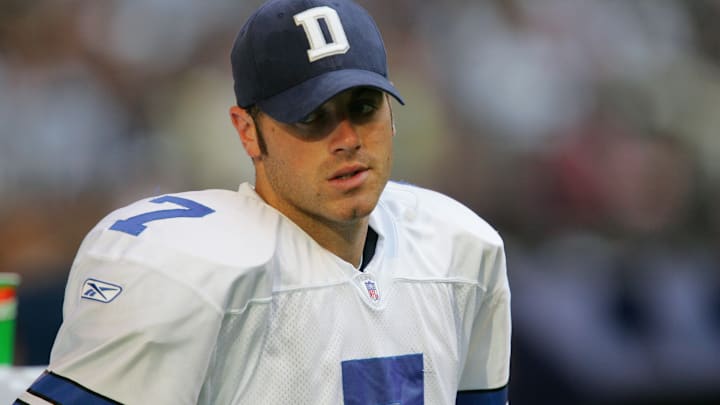
The heir to Tom Brady as the starting quarterback of the University of Michigan, Henson would play a total of eight big league games for the Yankees, batting just .111 in those few appearances between 2002 and 2003. He'd transition to football in 2004, playing in seven games for the Dallas Cowboys, tallying a paltry 78 passing yards.
He'd resurface with the Detroit Lions in 2008, throwing two more passes before hanging up his cleats in both sports for good.
Given the hype and the large investment, the Yankees got very little out of a player who was once thought to be a future star in either league.
5. Catcher David Parrish
The Yankees picked David Parrish not once but twice, first selecting him out of high school in the tenth round back in 1997, then again at pick 28 in the first round back in 2000.
Investing such a high pick in a catcher at that point in time was a head-scratcher for sure. That very same year, Jorge Posada claimed the starting catcher job outright, emerging from his timeshare with the more defensive-minded Joe Girardi, and was in the midst of a season where he slashed .287/.417/527 with 28 homers. He was just 28 years old at the time and entering the prime of his career.
As for Parrish, he'd play nine minor league seasons, never cracking the big league roster. To make matters worse, the player selected the very next pick was Adam Wainwright, who would go on to post a 3.53 ERA over his illustrious career.
4. Third baseman Eric Duncan
In the early 2000s, the Yankees found themselves looking for a long-term solution at third base. Scott Brosius decided to hang it up after the 2001 World Series. Robin Ventura would serve as a placeholder for the next year and a half before a deadline deal brought Aaron Boone to the Yankees in 2003.
That same year, the Bombers selected local kid Eric Duncan out of Seton Hall Prep with eyes on him being the third baseman of the future. A few months later, Boone tore his ACL playing pickup basketball, opening the door for the blockbuster deal that brought Alex Rodriguez to the Bronx.
Duncan was effectively blocked. It wouldn't matter anyway, as his bat fizzled once he reached the upper levels of the minors. Duncan would go on to play 1,006 minor league games, never once getting a taste of big league action.
3. Shortstop CJ Henry
For some reason, the Yankees believed in 2005, with Derek Jeter still in his prime, that it was time to start thinking about the future at shortstop. This led them to draft high schooler CJ Henry 17th overall.
Much of what was said about Cito Culver applies to Henry as well, and even more so given that Jeter was still at his peak and this was a relatively high draft position for the Yankees, given their run of dominance.
Henry is best remembered as the centerpiece of the package that landed Bobby Abreu in the Bronx, and that was the highlight of his baseball career, which was over by 2008. Henry would go on to be a benchwarmer for the University of Kansas men's basketball team before resurfacing briefly in the Independent Leagues in 2013 and 2015.
This pick stings even more knowing the team would fare much better in the 2006 draft.
2. Shortstop Dennis Sherrill
If things had gone the way the Yankees and Dennis Sherrill had hoped, the 1974 first-round pick would have served as the bridge between two prominent figures in Yankees lore, Bucky "Bleepin'" Dent and Derek Jeter.
Unfortunately for both parties, that never came to fruition. Sherrill would play just five big league games, arriving as a 22-year-old in 1978 for a two-game cameo, and then playing in three more in 1980.
During those brief appearances, he tallied just five at-bats, recording a lone hit. At pick 13, one spot after the Yankees selected Sherrill, the St. Louis Cardinals would pick shortstop Garry Templeton, who would go on to play 2,079 big league games, compile 27.8 bWAR, and make three All-Star teams. Oops.
1. LHP Brien Taylor
No list of Yankees draft busts would be complete without the king of the category, former first overall pick Brien Taylor.
When the Yankees picked Taylor out of East Carteret High School in Beaufort, North Carolina, the world thought they were getting a future star. With ideal size at 6-foot-3, 220 pounds, and a fastball that reached the upper 90s, the southpaw had all the tools. Baseball America would rank him as the No. 1 prospect in all of baseball ahead of the 1992 season, and his $1.55 million signing bonus was a record at that time.
Upon arriving on the scene, Taylor immediately delivered with a 2.57 ERA over 161.1 innings for Hi-A Fort Lauderdale. The next year, in 1993, Taylor would post a 3.48 ERA for Double-A Albany-Colonie. He'd miss the 1994 season with a torn labrum sustained in an off-field altercation, and would never be the same.
He'd only make 46 more minor league appearances from 1995 through 2000, leaving the Yankee organization after 1998. Taylor never threw a big-league pitch.
While you can't necessarily fault the Yankees for picking Taylor at the time, the 13th overall pick in 1991 went on to hit 555 big league homers. His name is Manny Ramirez, who, after migrating from the Dominican Republic, found himself playing high school ball at George Washington High School, right across the Harlem River from Yankee Stadium.
Imagine how dynamic the late 90s Yankee dynasty would have been with Manny in the fold alongside the Core Four? That would have broken baseball in the sweetest way possible. Alas, instead, we were left with a record-setting draft bust.
 Add us as a preferred source on Google