%20%20--%3E%0A%3Csvg%20version%3D%221.1%22%20xmlns%3D%22http%3A%2F%2Fwww.w3.org%2F2000%2Fsvg%22%20xmlns%3Axlink%3D%22http%3A%2F%2Fwww.w3.org%2F1999%2Fxlink%22%20x%3D%220px%22%20y%3D%220px%22%0A%09%20viewBox%3D%220%200%202329.5%20200%22%20style%3D%22enable-background%3Anew%200%200%202329.5%20200%3B%22%20xml%3Aspace%3D%22preserve%22%3E%0A%3Cstyle%20type%3D%22text%2Fcss%22%3E%0A%09.st0%7Bfill%3A%23231F20%3B%7D%0A%09.st1%7Bfill%3A%23001641%3B%7D%0A%09.st2%7Bfill%3A%23FFFFFF%3B%7D%0A%09.st3%7Bfill%3A%23999999%3B%7D%0A%3C%2Fstyle%3E%0A%3Cg%20id%3D%22Template%22%3E%0A%3C%2Fg%3E%0A%3Cg%20id%3D%22Layer_2%22%3E%0A%09%3Cg%3E%0A%09%09%3Cpath%20class%3D%22st2%22%20d%3D%22M190.3%2C6.4h-77.2l-2.8%2C34.5h8.3c5%2C0%2C7.4%2C1.4%2C7.4%2C4.1c0%2C0.8-0.2%2C1.8-0.6%2C2.8L96.6%2C96l-29-48.3%0A%09%09%09c-0.4-1-0.6-1.9-0.6-2.8c0-2.8%2C2.5-4.1%2C7.4-4.1h8.3L80%2C6.4H2.8L0%2C40.9h11c4.6%2C0%2C8.7%2C2.3%2C12.4%2C6.9l52.3%2C82.6v27.7%0A%09%09%09c0%2C4.6-2.3%2C6.9-6.9%2C6.9H48.1l2.8%2C34.5h91l2.8-34.5H124c-4.6%2C0-6.9-2.3-6.9-6.9v-27.6h0.1l52.4-82.8c3.7-4.6%2C7.8-6.9%2C12.4-6.9h11%0A%09%09%09L190.3%2C6.4z%22%2F%3E%0A%09%09%3Cpath%20class%3D%22st2%22%20d%3D%22M379.3%2C158.1L351.7%2C47.8c0-4.6%2C2.3-6.9%2C6.9-6.9h9.7l-2.8-34.5h-131l-2.8%2C34.5h9.7c4.6%2C0%2C6.9%2C2.3%2C6.9%2C6.9%0A%09%09%09l-27.6%2C110.3c-2.8%2C4.6-6.4%2C6.9-11%2C6.9h-16.6l2.8%2C34.5h80l2.8-34.5H269c-4.6%2C0-6.9-2.3-6.9-6.9l4.8-20.7h66.2l4.8%2C20.7%0A%09%09%09c0%2C4.6-2.3%2C6.9-6.9%2C6.9h-9.7l2.8%2C34.5h80l2.8-34.5h-16.6C385.7%2C165%2C382.1%2C162.7%2C379.3%2C158.1z%20M274.5%2C105.6l15.2-64.7h20.7%0A%09%09%09l15.2%2C64.7H274.5z%22%2F%3E%0A%09%09%3Cpath%20class%3D%22st2%22%20d%3D%22M537.7%2C6.4l-2.8%2C34.5h20.7c4.6%2C0%2C6.9%2C2.3%2C6.9%2C6.9v80l-69-121.4h-66.2l-2.8%2C34.5h20.7c4.6%2C0%2C6.9%2C2.3%2C6.9%2C6.9%0A%09%09%09v110.3c0%2C4.6-2.3%2C6.9-6.9%2C6.9h-20.7l2.8%2C34.5h91l2.8-34.5h-20.7c-4.6%2C0-6.9-2.3-6.9-6.9v-80l69%2C121.4h41.4V47.8%0A%09%09%09c0-4.6%2C2.3-6.9%2C6.9-6.9h20.7l-2.8-34.5H537.7z%22%2F%3E%0A%09%09%3Cpath%20class%3D%22st2%22%20d%3D%22M814.6%2C158.1l-22.8-55.3h-6.8l22.6-55c1.8-4.6%2C5-6.9%2C9.7-6.9h17.9l-2.8-34.5h-52.4l-32.6%2C80h-29.5V47.8%0A%09%09%09c0-4.6%2C2.3-6.9%2C6.9-6.9h20.7l-2.8-34.5h-91l-2.8%2C34.5h20.7c4.6%2C0%2C6.9%2C2.3%2C6.9%2C6.9v110.3c0%2C4.6-2.3%2C6.9-6.9%2C6.9h-20.7l2.8%2C34.5h91%0A%09%09%09l2.8-34.5H725c-4.6%2C0-6.9-2.3-6.9-6.9v-37.2h37l32%2C78.6h52.4l2.8-34.5h-17.9C819.7%2C165%2C816.4%2C162.7%2C814.6%2C158.1z%22%2F%3E%0A%09%09%3Cpath%20class%3D%22st2%22%20d%3D%22M997.8%2C13.8c-6.8-5-16-7.4-27.6-7.4h-69c-27.6%2C0-41.4%2C13.8-41.4%2C41.4v27.6c0%2C27.6%2C13.8%2C41.4%2C41.4%2C41.4h75.9%0A%09%09%09c4.6%2C0%2C6.9%2C2.3%2C6.9%2C6.9v34.5c0%2C4.6-2.3%2C6.9-6.9%2C6.9h-75.9v-27.6h-41.4v62.1H984c27.6%2C0%2C41.4-13.8%2C41.4-41.4v-34.5%0A%09%09%09c0-27.6-13.8-41.4-41.4-41.4h-75.9c-4.6%2C0-6.9-2.3-6.9-6.9V47.8c0-4.6%2C2.3-6.9%2C6.9-6.9h69c4.6%2C0%2C6.9%2C2.3%2C6.9%2C6.9v20.7h41.4v-69%0A%09%09%09h-27.6V13.8z%22%2F%3E%0A%09%09%3Cpath%20class%3D%22st2%22%20d%3D%22M1233.9%2C13.8c-6.8-5-16-7.4-27.6-7.4h-69c-27.6%2C0-41.4%2C13.8-41.4%2C41.4v110.3c0%2C27.6%2C13.8%2C41.4%2C41.4%2C41.4h82.8%0A%09%09%09c27.6%2C0%2C41.4-13.8%2C41.4-41.4v-69h-75.9v34.5h34.5v34.5c0%2C4.6-2.3%2C6.9-6.9%2C6.9h-69c-4.6%2C0-6.9-2.3-6.9-6.9V47.8%0A%09%09%09c0-4.6%2C2.3-6.9%2C6.9-6.9h69c4.6%2C0%2C6.9%2C2.3%2C6.9%2C6.9v20.7h41.4v-69h-27.6V13.8z%22%2F%3E%0A%09%09%3Cpath%20class%3D%22st2%22%20d%3D%22M1403.3%2C6.4h-82.8c-27.6%2C0-41.4%2C13.8-41.4%2C41.4v110.3c0%2C27.6%2C13.8%2C41.4%2C41.4%2C41.4h82.8%0A%09%09%09c27.6%2C0%2C41.4-13.8%2C41.4-41.4V47.8C1444.7%2C20.2%2C1430.9%2C6.4%2C1403.3%2C6.4z%20M1403.3%2C158.1c0%2C4.6-2.3%2C6.9-6.9%2C6.9h-69%0A%09%09%09c-4.6%2C0-6.9-2.3-6.9-6.9V47.8c0-4.6%2C2.3-6.9%2C6.9-6.9h69c4.6%2C0%2C6.9%2C2.3%2C6.9%2C6.9V158.1z%22%2F%3E%0A%09%09%3Cpath%20class%3D%22st2%22%20d%3D%22M1705.7%2C6.4h-77.2l-2.8%2C34.5h8.3c5%2C0%2C7.4%2C1.4%2C7.4%2C4.1c0%2C0.8-0.2%2C1.8-0.6%2C2.8l-29%2C48.3l-29-48.3%0A%09%09%09c-0.4-1-0.6-1.9-0.6-2.8c0-2.8%2C2.5-4.1%2C7.4-4.1h8.3l-2.8-34.5h-77.2l-2.8%2C34.5h11c4.6%2C0%2C8.7%2C2.3%2C12.4%2C6.9l52.3%2C82.6v27.7%0A%09%09%09c0%2C4.6-2.3%2C6.9-6.9%2C6.9h-20.7l2.8%2C34.5h91l2.8-34.5h-20.7c-4.6%2C0-6.9-2.3-6.9-6.9v-27.6h0.1l52.4-82.8c3.7-4.6%2C7.8-6.9%2C12.4-6.9%0A%09%09%09h11L1705.7%2C6.4z%22%2F%3E%0A%09%09%3Cpath%20class%3D%22st2%22%20d%3D%22M1894.1%2C158.1l-27.6-110.3c0-4.6%2C2.3-6.9%2C6.9-6.9h9.7l-2.8-34.5h-131l-2.8%2C34.5h9.7c4.6%2C0%2C6.9%2C2.3%2C6.9%2C6.9%0A%09%09%09l-27.6%2C110.3c-2.8%2C4.6-6.4%2C6.9-11%2C6.9h-16.6l2.8%2C34.5h80l2.8-34.5h-9.7c-4.6%2C0-6.9-2.3-6.9-6.9l4.8-20.7h66.2l4.8%2C20.7%0A%09%09%09c0%2C4.6-2.3%2C6.9-6.9%2C6.9h-9.7l2.8%2C34.5h80l2.8-34.5h-16.6C1900.6%2C165%2C1896.9%2C162.7%2C1894.1%2C158.1z%20M1789.3%2C105.6l15.2-64.7h20.7%0A%09%09%09l15.2%2C64.7H1789.3z%22%2F%3E%0A%09%09%3Cpath%20class%3D%22st2%22%20d%3D%22M2104.9%2C158.1l-14.9-35.6c19.1-3.9%2C28.7-17.3%2C28.7-40.3V47.8c0-27.6-13.8-41.4-41.4-41.4h-135.2l-2.8%2C34.5%0A%09%09%09h20.7c4.6%2C0%2C6.9%2C2.3%2C6.9%2C6.9v110.3c0%2C4.6-2.3%2C6.9-6.9%2C6.9h-20.7l2.8%2C34.5h91l2.8-34.5h-20.7c-4.6%2C0-6.9-2.3-6.9-6.9v-34.5h38.1%0A%09%09%09l30.9%2C75.9h52.4l2.8-34.5h-17.9C2109.9%2C165%2C2106.7%2C162.7%2C2104.9%2C158.1z%20M2077.3%2C82.2c0%2C4.6-2.3%2C6.9-6.9%2C6.9h-62.1V47.8%0A%09%09%09c0-4.6%2C2.3-6.9%2C6.9-6.9h55.2c4.6%2C0%2C6.9%2C2.3%2C6.9%2C6.9V82.2z%22%2F%3E%0A%09%09%3Cpath%20class%3D%22st2%22%20d%3D%22M2288.1%2C6.4h-135.2l-2.8%2C34.5h20.7c4.6%2C0%2C6.9%2C2.3%2C6.9%2C6.9v110.3c0%2C4.6-2.3%2C6.9-6.9%2C6.9h-20.7l2.8%2C34.5h135.2%0A%09%09%09c27.6%2C0%2C41.4-13.8%2C41.4-41.4V47.8C2329.5%2C20.2%2C2315.7%2C6.4%2C2288.1%2C6.4z%20M2288.1%2C158.1c0%2C4.6-2.3%2C6.9-6.9%2C6.9H2226%0A%09%09%09c-4.6%2C0-6.9-2.3-6.9-6.9V47.8c0-4.6%2C2.3-6.9%2C6.9-6.9h55.2c4.6%2C0%2C6.9%2C2.3%2C6.9%2C6.9V158.1z%22%2F%3E%0A%09%3C%2Fg%3E%0A%3C%2Fg%3E%0A%3C%2Fsvg%3E%0A)

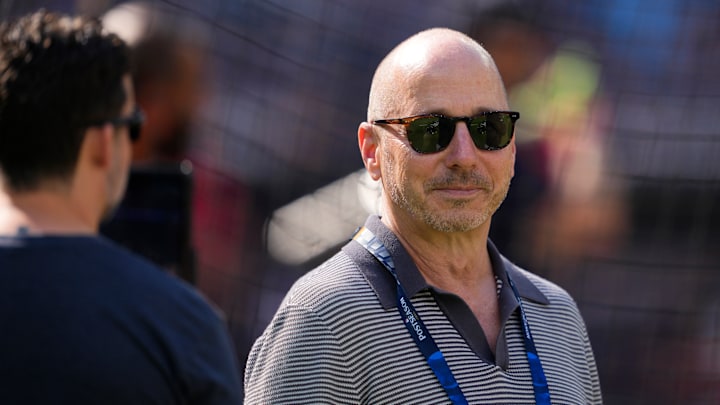
The definition of insanity is doing the same thing over and over again and expecting different results. In the decade-and-a-half title-less nightmare version of Groundhog Day the New York Yankees and their fans have been living, it's a very familiar definition, and it's one Brian Cashman needs to absorb.
The Yankees' long-time general manager has certainly become set in his ways, and those ways have actively held the club back in recent years. Three big Cashman habits in particular are things we'd love to see change. In many ways, they must change in order to avoid compounding the mistakes of the past any further, and get back to the baseball mountain top for the first time since 2009.
Three Brian Cashman habits that need to be broken in order to make the Yankees' 2026 campaign a success
3. Overpaying in years to lower the average annual value of free-agent contracts and player extensions
A hallmark of the Brian Cashman era, at least under Hal Steinbrenner, has been to extend out contracts, paying a little more in terms of total value, in order to lower the deal's AAV. This is significant because the AAV is what is used to determine luxury tax calculations.
Therefore, by depressing the AAV by tacking a couple more years on the deal, Cashman believes he's finding more wiggle room in the club's stringent, self-imposed budget. That's how you get Max Fried plus Paul Goldschmidt for just a hair over the $36.4 million AAV the Dodgers gave Blake Snell.
Two problems, however. First, no disrespect to Max Fried, but that's how you get a 6.75 ERA from your ace in the 2025 playoffs versus the razor-thin 0.86 mark that Snell has given LA leading into the World Series.
Second, you eventually have to pay the piper on those deals. While you could argue that Fried plus Goldschmidt was more valuable than Snell alone, can you make the same case for Fried plus DJ LeMahieu? After all, it was LeMahieu's money that was a driving factor behind seeing Oswald Peraza flail at the hot corner for the majority of the season, which then necessitated the panic trade for Ryan McMahon at the deadline.
LeMahieu's ghost will haunt the Yankees again in 2026, replacing the recently exorcised specter of Aaron Hicks' dead money. What hole will be left open next season because the Yankees are paying their former batting champ to sit on his couch?
The Fried deal? That will be another one that will hold the club back in four or five years. In their quest to be fiscally responsible and avoid the highest tax rate, the Yankees actually ensure that their investments go belly up, creating a vicious cycle of being good, but not great, while the rot of dead money eats away at the payroll.
Some insiders think it will be more of the same for New York this offseason, and to that, all we can say is say it ain't so.
2. Overvaluing "years of team control" in trades
Don't misinterpret this. Team control can be a valuable thing when evaluating a trade target, especially when that comes at a monetary discount, like players in the arbitration or pre-arb years. That's also why such players have a higher cost of acquisition.
But not everyone is worth paying that price. Remember Scott Effross and his impressive "years of team control?" Where has that gotten the Yankees exactly? Wouldn't a different Cubs reliever, old friend David Robertson, have been a better acquisition to stabilize the bullpen back in 2022?
Or how about what the Yankees gave up for Effross in starter Hayden Wesneski? Wesneski hasn't developed into a stud starter, but he was one of the three pillars of the Kyle Tucker trade last winter. Hypotheticals are a dangerous game, but wouldn't a better use of Wesneski have been putting him together with Jasson Dominguez and, say, Spencer Jones to land Tucker?
More recently, couldn't you find many better uses of Roc Riggio's talents thanflipping him for Jake Bird? How many Effross's and Bird's does a club really need anyway?
The point here is two-fold. First, the premium you pay for team control also means you're getting a lesser talent back than if you had used the same asset for a rental. Second, there are only so many roster spots to go around, and you eventually lock yourself into guys you'd like to upgrade from if the experiment doesn't work.
When it comes to a player with star potential, like Jazz Chisholm Jr., it makes sense. But when you're just upgrading the fringe of your roster, a veteran rental does the job better. In heeding that advice, Cashman would have more wiggle room to upgrade the roster this offseason. Sure, he could non-tender guys like Effross and Bird, but that would mean admitting defeat and telling the world he gave away useful assets for nothing. Instead, he'll hold on to hope that with time, these guys pan out, exacerbating the problem along the way.
1. Hugging prospects too long until their value turns to dust
The list of highly-regarded prospects whose value turned to dust under Cashman in recent years is long. It was only a couple of years ago that Oswald Peraza was the 52nd-ranked prospect in all of baseball. By that point, Cashman had decided that Anthony Volpe was the shortstop of the present and future, so why hang on to Peraza unless the ultimate goal was to trade him two years later to the Los Angeles Angels for a Snickers bar?
That's just one example of the many youngsters who could have netted big returns, yet were eventually sold off for a bag of balls. Combine that with the fact that Cashman regularly trades good-not-great prospects in return for middling big leaguers with years of control, and you have grossly ineffective management of the minor leagues.
Furthermore, all three of these habits come to a head and have a compounding effect. By overspending in years, Cashman limits the ability of prospects he has no plan for to break through, contributing to them withering away.
For example, wouldn't it have made more sense to give Peraza run at third base in the first half of 2024, over the broken-down body of DJ LeMahieu, who was forced into the lineup because he was still getting paid a nice chunk of change? At least that way, you could have seen if there was something there rather than getting no value from a veteran and killing a once-promising prospect's trade value in the process.
Wouldn't it also make more sense to embrace flexibility by targeting veteran rentals at the trade deadline over controllable players, and then be able to go into the offseason with something of a blank canvas aside from your core players?
Wouldn't it make more sense to have money in the budget for the big swings, because you weren't cutting off your nose to spite your face by manipulating AAV to avoid the tax, leaving holes on the roster coming out of spring training only to make panic trades to address them, typically with worse options, in July?
At the end of the day, these habits all interconnect and are primary reasons the Yankees' dynasty has crumbled. The sooner Brian Cashman takes a hard look in the mirror and realizes it's time to change his behavior, the sooner the Yankees can return to being the Evil Empire that everyone outside of New York loved to hate.
 Add us as a preferred source on Google